And Maybe They’re Things Your Grandkids Need to Know Too…

I’ve been doing this ministry thing for over half a century.

I’ve preached a lot of sermons. I’ve stood at altars with people on some of the best days of their lives and some of the hardest. I’ve watched churches grow, ministries change, trends come and go, and God do things I could never have planned. 

But the older I get, the more I realize something:

The things that matter most are really pretty simple.

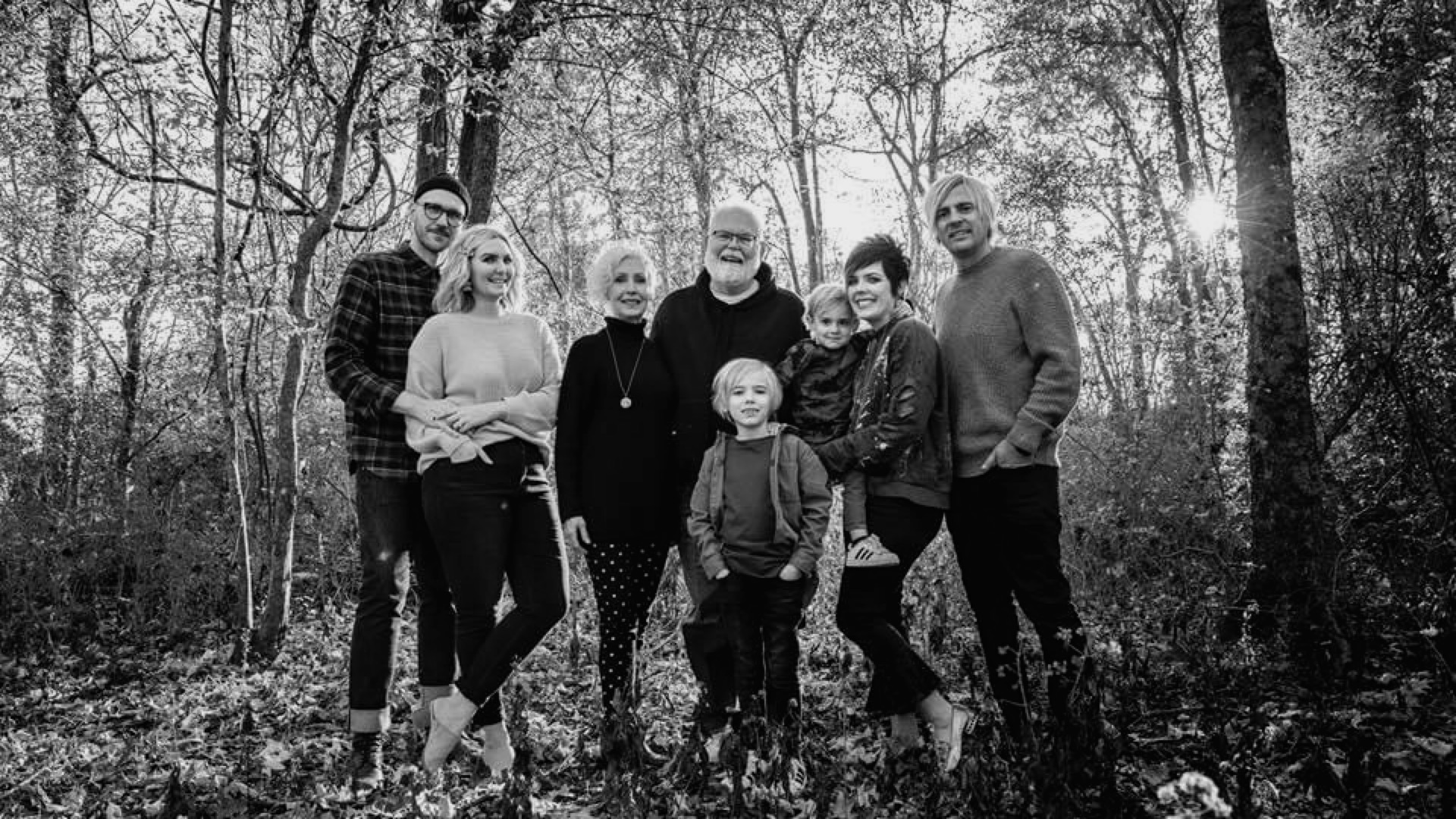
These days I think a lot about my three grandsons—Rhythm, Royal, and Sparrow. And I find myself thinking less about what I want to give them and more about what I want to leave in them.

There’s a big difference.

You can leave your grandkids money. You can leave them property. You can leave them your stuff.

But the greatest legacy isn’t what you leave to someone.

It’s what you leave in them. 

I’m about to release my new book, Grandparenting on Purpose. A big part of the book is about being intentional in passing our faith to our grandchildren so they can pass it to their children and their children’s children. 

Deuteronomy 4:9 tells us not to forget what our eyes have seen but to teach those things to our children and to their children after them.

That verse has become increasingly important to me because I’ve realized something:

I am the keeper of my family’s God-stories.

And so are you.

You can’t pass on what you haven’t identified as important enough to pass on. 

So I started asking myself: If I could make sure my grandkids really understood just a handful of things before my assignment here is finished, what would they be?

I came up with twelve.

Maybe my list will help you make yours.

1. I Want Them to Know God Is Faithful

I’ve followed Jesus long enough to have questions I couldn’t answer.

I’ve experienced disappointments I didn’t understand. I’ve prayed prayers that weren’t answered the way I wanted. I’ve watched doors unexpectedly open and watched others close that I desperately wanted to stay open.

But through all of it, I have never found God to be unfaithful. 

Deuteronomy 7:9 calls Him “the faithful God.”

Lamentations 3 reminds us that His compassion never fails and His mercies are new every morning.

Our grandkids are going to discover that people disappoint you. Plans change. Life surprises you.

I want mine to know where to stand when everything else starts moving.

Plant both feet on the faithfulness of God.

2. I Want Them to Know Jesus Has a Plan for Their Lives

I don’t want my grandkids growing up believing they’re accidents trying to manufacture significance.

I want them to understand they were made on purpose, for a purpose.

Ephesians 2:10 says we’re God’s handiwork, created in Christ Jesus for good works that He prepared in advance for us.

In other words, there are assignments with their names already on them.

One of the guiding Scriptures of my life has been Psalm 37:23: “The Lord makes firm the steps of the one who delights in him.”

I’ve learned God usually doesn’t show us the whole staircase.

He shows us the next step.

Then our job is to take it. 

That’s something I want my next generation to understand.

3. I Want Them to Know Relationships Matter

Who you walk with matters almost as much as where you’re walking.

Proverbs says iron sharpens iron.

So I want my grandkids to choose people who sharpen them instead of people who dull their edge.

And when it comes to dating and marriage, I’ve got one of those Big G sayings I want them to remember:

You will never marry someone you don’t date.

So know before you go.

Don’t date somebody hoping they’ll eventually become the kind of person you should marry.

Watch character. And when God brings the right person into your life, love them intentionally.

After nearly five decades of marriage to Julie, I know this much:

A good marriage isn’t built accidentally. It’s built one decision at a time. 

4. I Want Them to Know They Can Hear God’s Voice

Jesus said in John 10:27, “My sheep listen to my voice; I know them, and they follow me.”

I want my grandkids to recognize God’s voice.

They’re growing up in a world noisier than the one I grew up in. Everybody has an opinion. Phones talk to us. Social media talks to us. Friends talk to us. Culture never stops talking.

That’s why the next generation desperately needs to learn to recognize the voice of God above all the others.

Read His Word. Pray. Listen.

And every once in a while, turn everything else off.

Sometimes hearing God starts with getting quiet. 

5. I Want Them Planted in God’s House

Notice I didn’t say I want them to attend church.

I want them planted.

Psalm 92:13 says those who are planted in the house of the Lord will flourish.

I’ve watched people treat church like a gas station. They pull in when they’re running on empty, get enough to keep going, and disappear until the warning light comes back on.

I don’t want that for my grandkids.

I want them to find a Bible-believing, Spirit-Filled church. Show up. Serve. Give. Build relationships. Let people know them. Let people pray for them. And don’t run every time something happens they don’t like. 

Here’s the picture I want them to remember:

A potted plant can be moved whenever the weather changes. A planted tree develops roots. Be a tree. 

6. I Want Them to Know Our Family’s God-Story

Every family has stories.

Tell the funny ones. Tell the vacation stories. Tell the stories everybody has heard a hundred times.

But please don’t forget the God-stories.

Psalm 78:4 says we’re to tell the next generation about the Lord’s power and the things He has done.

Tell them how God provided. Tell them how He called you. Tell them about the doors He opened.

Tell them how He protected you. Tell them about answered prayers.

And especially tell them about the hard seasons God brought you through. 

Psalm 145:4 says, “One generation commends your works to another.”

Grandparents, don’t let the God-stories stop with you.

7. I Want Them to Have Scriptures They Can Build Their Lives On

The Bible isn’t decoration for a coffee table.

It’s ammunition for life.

Psalm 37:23–24 has carried me through a lot of seasons. So has Philippians 4:13.

I want my grandkids to find their verses. Memorize them. Write them down.

Underline them. Put them somewhere they’ll see them.

Because one day life will get dark, and they won’t need a verse they once saw on social media.

They’ll need the Word of God that’s already inside them. 

8. I Want Them to Know How to Talk to God

Prayer doesn’t have to sound religious. God isn’t grading your vocabulary.

He’s interested in you. Talk to God when you’re happy.

Talk to Him when you’re scared. Talk to Him when you’re confused.

Talk to Him when you’re angry. Talk to Him when you’ve messed up.

Talk to Him when something wonderful happens.

First Thessalonians 5:17 simply says, “Pray continually.”

Here’s what I want my grandkids to understand:

Prayer isn’t an event you attend. It’s a relationship you live.

And since conversations work both ways, sometimes quit talking and listen. 

Blank 93.pdf

9. I Want Them to Know How to Work

Nobody owes you a living. Colossians 3:23 says whatever you do, do it wholeheartedly as unto the Lord.

That’s a principle I want passed down.

Show up. Be on time. Keep your word. Finish what you start.

Do more than you’re asked when you can.

If you’re sweeping a floor, sweep it well. If you’re running a company, run it with excellence. And if you’re serving God, don’t give Him your leftovers. 

Work like your name is on it—because it is.

10. I Want Them to Understand Honor and Authority

This one won’t get as many likes on social media, but it can take a young person a long way.

Learn to honor.

Ephesians 6 connects honoring your father and mother with a promise: “that it may go well with you.”

I’ve always paid attention to that. Honor has a promise attached to it.

And the principle of honor doesn’t disappear when you turn eighteen.

There will be teachers, coaches, bosses, pastors, and leaders. You won’t always agree with them, and you don’t have to.

But you can still learn honor.  After watching leaders for more than fifty years, I’ve noticed something:

People who learn to carry honor well usually learn to carry authority well. 

11. I Want Them to Know Family Is Worth Fighting For

The older I get, the more important family becomes.

Not less. More.

This world gives us a thousand things to chase—careers, money, recognition, success, experiences.

But here’s something I want my grandkids to remember:

Don’t win everywhere else and lose at home.

Joshua said, “As for me and my household, we will serve the Lord.”

That’s not just something to put on a sign in your kitchen.

It’s a decision. As well as a daily choice.

Be the person who brings family together. Call. Show up. Forgive quickly. Say you’re sorry. Celebrate birthdays. Make memories. Take pictures. Tell stories. Eat meals together.

And when family gets complicated—and it will—don’t throw people away too quickly. 

Family isn’t something you squeeze into your schedule. Family is part of your assignment.

12. I Want Them to Be Able to Point to My Life and Say, “Big G Trusted God”

This might be the most important one.

I don’t care if my grandkids remember every book I wrote.

I don’t care if they remember where I spoke, every church I served, or every ministry idea I ever had.

But I desperately want them to remember this:

Big G trusted God.

Hebrews 13:7 tells us to consider the outcome of the lives of those who taught us God’s Word and to imitate their faith.

That’s the legacy I want. Not fame. Faith. 

I want my grandkids to remember times when things didn’t look good, but Big G kept trusting.

When the answer didn’t come quickly, he kept believing.

When life got hard, he didn’t quit. Paul said near the end of his life:

“I have fought the good fight, I have finished the race, I have kept the faith.” — 2 Timothy 4:7

That’s how I want to finish. Not perfect. Faithful. 

And isn’t that really what grandparenting on purpose is all about?

We’re not trying to make little copies of ourselves.

We’re trying to leave behind men and women who know Jesus, trust God, love their families, serve His Church, know His Word, work hard, honor others, and have their own God-stories to tell.

Because someday our grandchildren will be the grandparents.

And they’ll sit around a table with another generation looking up at them.

What will they tell them? Hopefully they’ll say:

“Let me tell you about something God did for our family a long time ago.”

And the story will keep going.

That’s how faith travels from generation to generation. 

So here’s my challenge to every grandparent reading this:

What’s on your list?

What are the things you know now that you don’t want your grandchildren to have to learn the hard way?

What are the God-stories only you can tell?

What Scriptures carried you? What prayers did God answer?

What do you want planted in them while you still have the opportunity to plant it?

Don’t just think about it.

Write it down. Tell the stories. Have the conversations. Be intentional.

Because your grandchildren don’t just need what you’ve accumulated.

They need what you’ve learned.

But it’s up to you to be intentional to pass it on!

It Might Be the Most Important Thing I’ve Ever Written

I’ve written a lot of books over the years. More than fifteen, if you’re counting. I’ve written about children’s ministry, leadership, recruiting volunteers, building teams, and finishing strong. And every single one of them meant something to me.
But this one is different.

“Grandparenting On Purpose: Leaving Faith in the Next Generation” is here  and I’ll be honest with you, I didn’t set out to write it. God kind of backed me into a corner on this one. Because somewhere between becoming a grandfather to Sparrow, Rhythm, and Royal, and watching the world they’re growing up in, I realized something that kept me up at night:
Loving your grandchildren isn’t enough.
I know that sounds harsh. Stay with me.

The grandparents who actually leave a lasting faith legacy in their families aren’t the ones who love their grandchildren the most, they’re the ones who show up with intention. They’re the ones who understand that this season of life isn’t a retirement from purpose. It’s one of the most significant assignments God will ever hand you.
And most of us were never trained for it.

That’s what this book is about. Twelve chapters. Real talk. Practical steps. No fluff, no guilt, just a road map for grandparents who are done drifting and ready to get intentional about the time they have left with the people who matter most.

This book talks about how to partner with your adult children instead of accidentally working against them. I talk about faith transfer, what it actually looks like to hand something living to the next generation instead of just a set of rules. I also talk about storytelling, technology, boundaries, legacy, and what it means to be present in a world that’s fighting for your grandchildren’s attention every second of every day.

I’ve spent more than fifty years in children’s and family ministry. I’ve seen what works and what doesn’t. I’ve coached thousands of leaders and spoken to hundreds of thousands of people. But nothing I’ve ever done hits closer to home than this.
Because Sparrow, Rhythm, and Royal aren’t a ministry project. They’re my grandsons. And everything in this book, I wrote for them first.

If you’re a grandparent or you’re about to be one or you know one who needs a nudge in the right direction, this book is for you. Grandparenting On Purpose is here, and I believe it’s going to change the way your family looks for generations.

You can order it here or on Amazon. The Audio Book will also be available soon on Audible.

Let’s be honest…

We all love talking about change—until it actually shows up uninvited.

There’s a big difference between leading change and being surprised by it.

One feels like vision.

The other feels like whiplash.

And if you’ve been in ministry long enough, you’ve experienced both.

The Myth of the Perfect Bus Ride

We’ve all heard it:

“Get the right people on the bus… and in the right seats.”

Great line. Preaches well. Makes for a strong leadership talk.

But in real life? Seats shift. People grow. Roles change.

And sometimes… the bus takes a turn you didn’t see coming.

Suddenly, what used to fit… doesn’t fit anymore.

And here’s the hard part:

Moving seats is never just strategic—it’s emotional.

It takes humility: 

  • From leaders who have to make tough calls
  • From team members who have to adjust
  • From everyone who has to trust the process when it’s not fully explained

When Communication Isn’t Perfect

Let’s go there for a second.

Sometimes communication is clear. Sometimes it’s not.

Sometimes you get a full explanation.

Sometimes you get… silence.

And that gap? That’s where assumptions grow.

But here’s a leadership truth I’ve learned over 50 years:

You don’t need full information to have full trust.

That doesn’t mean we ignore communication—it matters deeply.

But when it’s lacking, maturity fills the gap.

Immaturity says: “Why didn’t they tell me everything?”

Maturity says: “God, what are YOU doing in me through this?”

God Is Doing a New Thing

Isaiah 43:19 says:

“See, I am doing a new thing! Now it springs up; do you not perceive it?”

We love that verse. We quote it. We preach it. We put it on slides.

But we skip the verse right before it:

“Forget the former things; do not dwell on the past.” (Isaiah 43:18)

Here’s the deal:

You can’t step into a new thing while holding onto an old thing.

God’s new work requires open hands.

And open hands mean… you had to let something go. Something that’s been your identity or that feels comfortable. But that old thing might has become an anchor that’s causing you to be stuck when the Lord saws it’s time to move.

When You Don’t Know Where You’re Going

Let me say something that might free you:

You don’t always need clarity—you need direction.

There are seasons where you won’t have a full map.

No GPS. No step-by-step.

Just a next step.

And in those moments, you go back to what you do know:

  • God is faithful
  • God is leading
  • God is not confused

So what do we do?

We keep our eyes on the Lord.

Not on the changes. Not on the confusion. Not on what we lost.

On Him.

What You Know for Sure

When change hits and clarity is low, here’s what you can anchor to:

  • You may not know where you’re going…
  • But you do know you can’t go back

And here’s the surprising part:

You don’t actually want to go back.

Even if it felt comfortable, even if it felt successful, even if it felt familiar.

Because growth changes you.

And once you’ve grown, yesterday’s version of life won’t fit anymore.

Coaching Moment

Let me talk to you like I would in a coaching call:

This moment you’re in? It’s not punishment. It’s not random.

It’s not the end.

It’s repositioning.

God is adjusting the seats. Shifting the roles. Rewriting the plan.

And yes—it takes humility.

Yes—it can feel unclear.

Yes—it stretches you.

But don’t miss it:

God isn’t just doing a new thing around you—He’s doing a new thing in you.

So take the next step. Trust the process. Keep your eyes on Him.

And remember…

You may not have chosen this change.

But with God, this change can still become your greatest growth.

What happens when you coach 12 of the sharpest Kidmin & NextGen leaders for 16 weeks that you’ve ever coached. YOU WRITE A BOOK! And that’s exactly what we did!

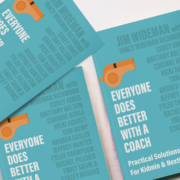
EVERYONE DOES BETTER WITH A COACH
Practical Solutions For Kidmin & NextGen Leaders is a brand new book from Jim Wideman Ministries.

Everyone can go farther and faster with someone coaching them than they can on their own. This is true in sports, it’s true in your health, it’s true in business and it’s also true in ministry.

I have always admired coaches. As a student of great teams in sports and ministry, I’ve been saying for years’Show me a successful team and I’ll show you a great coach.” I’ve also noticed truly great coaches have developed the skills to produce a winning team wherever they coach. Also they have learned how to assemble other great coaches around them. That’s exactly what I’ve done in EVERYONE DOES BETTER WITH A COACH- Practical Solutions For Kidmin & NextGen Leaders.

I’ve assembled some of the brightest and best coaches from my “Think Different Coaching Network. We identified some of the most common struggles that today’s Kidmin & NextGen leaders are facing and I asked each one to offer five solutions that you can do now to bring clarity and coaching to turn each challenge into an opportunity to improve. Each coach will also offer you a question to help guide you to taking your first step. Now you can get a team of coaches to help guide you to victory.
EVERYONE, YES EVERYONE DOES BETTER WITH A COACH.
When you order the paperback from me I’ll throw in the digital book free. Order yours today!

I love working with kids and families of all the things I could have spent my life doing this is truly an honor. But even greater than this has been the wonderful privilege of being Julie’s husband, Yancy & Whitney’s Dad, and Sparrow and Rhythm’s “G”! Being an Orange thinker you’ve heard me say this before, “What you teach and train your children about God matters!” It’s my responsibility, priority and privilege as a parent to do this. But it’s also my responsibility, priority and privilege to teach them about marriage and family by setting an example and modeling God’s Word. You’ve also heard me say this before in conferences, articles, books and blogs, “What happens at home is more important than what happens at church.” God’s original plan for world evangelism and the mission of the family is laid out in Deuteronomy 6:6-7 These commandments that I give you today are to be upon your heart. Impress them on your children. Talk about them when you sit at home and when you walk along the road, when you lie down and when you get up. How do we do this? In my book CONNECT WITH YOUR KIDS I give you twelve things you can do as a parent to connect your kids to God. Here’s just a few to get you started.

Family ministry starts at home. Decide you and the inhabitants of your household will serve the Lord. You have heard this verse a thousand times Josh. 24:15   But if serving the LORD seems undesirable to you, then choose for yourselves this day whom you will serve, whether the gods your forefathers served beyond the River, or the gods of the Amorites, in whose land you are living. But as for me and my household, we will serve the LORD.” What does this mean? It’s simple; make Jesus an everyday part of your lives. Live out what you are asking the families at your church to do at their house. We never did devotions as a family instead Julie and I still to this day take advantage of every opportunity to apply God’s Word to the thinking of every member of our family (including each other) not to allow a stronghold to be formed. A stronghold? Yes, I define a stronghold as wrong thinking that does not line up with the truth of God’s Word. As parent be careful what and who you allow in your home. It’s easier to start strict when kids are young and relax as they get older and allow them to make good choices based on the Bible. The bottom line is be an example!

Love your spouse the way you want your children’s spouse to love them. I don’t know why we think we can have a strong family and not have a strong marriage. Great marriages are a work in progress and happen when you make it a priority. You’ve heard me say if you aim at nothing you hit it every time. You need a plan to make your marriage strong. What ever you did to win your spouse’s affection is the same actions you need to choose to keep their affection. Spend as much time together as you can. Also spend quality time have a plan for your time together. Communicate well. Learn to be a listener. Be intentional when it comes to dates, trips and make special times together to be a regular part of your life. Set a night to be date night and make it a priority. Just like we want our children to see we love the Lord first and foremost let your spouse see firsthand that other than Jesus there is no other person on this earth we love other than them including our kids.

Spend lots of time with your kids. My kids are my third priority so when it comes to controlling my schedule and not letting it control me I have to make making time for my kids a lifestyle choice. Julie and I chose from the beginning of us becoming parents that it was both of our desires to be a close family. Even though our kids are grown this is still a priority. Because of the time we invested when our children where young they make time for us now that they are grown. Our children know they are always invited to go on family vacations. Sunday lunch is a special family time for us. Long before my girls ever went on a date they had dates with Dad. I’ve tried to make the time I have with my kids all about them not just including them in things I want to do. I’ve tried to not miss anything that was important to them. If I worked hard to plan the times at church I have with the kids of my church why don’t I look for ways to make off days and evening special for the kids ho live t my house.

Seek to understand how God has made each member of your family differently and allow them to be different. My wife and I are very different and I believe different is a good thing. I’m a spender and Julie is a saver. I am overly generous she can be a little tight. We need each other. Our kids are a different mix of both of us. Even though our girls had the same parents ate the same food and lived in the same house they are as different as night and day. I realized when I first started working in the local church. God makes us all different as part of His plan. We are the body of Christ and just like every part of His body has a different purpose and function so does the members of our family. Different personalities calls for differences in how we parent, how we discipline and how we communicate our love as well as how we communicate information. Celebrate how differences, strength and gifts of each family member and dare to speak in their language in a way they can receive and understand you. Dare to be an encourager. To encourage mean to inspire with courage, spirit, or hope, to spur on; to give help to. Be a helper, an encourage and a cheerleader for every member of your family especially your mate.

Be open and honest at all times and admit your mistakes and demonstrate repentance. Why do we try to hide our mistakes from the people who see them the most? My Mom taught me early in life, “Things are not as bad as I think they are. She also told me I’m not as wonderful as I think I am either, it’s always somewhere in between. Our families know firsthand our struggles and inconsistencies but what makes the difference is when we don’t try to hide them or pretend they are not there but we admit them and let they see we are doing something about it. Your family needs to learn from your example Godly repentance. You see there’s a big difference in “I’m sorry and true repentance.” Repentance calls for different behavior. When your family sees you modeling repentance it’s easier for them to apply this in their own lives.

  Establishing a family ministry starts with your family. Others will follow your example! It’s never too late to make right choices, I am so thankful we serve a God who is the God of a second chance for me and my family and the families I get to minister to at church.